In no particular order…
In no particular order…
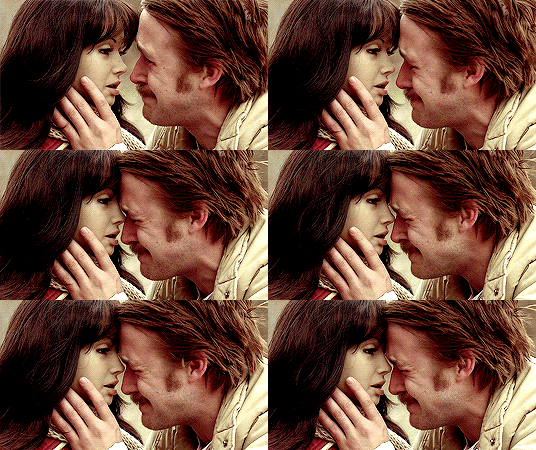
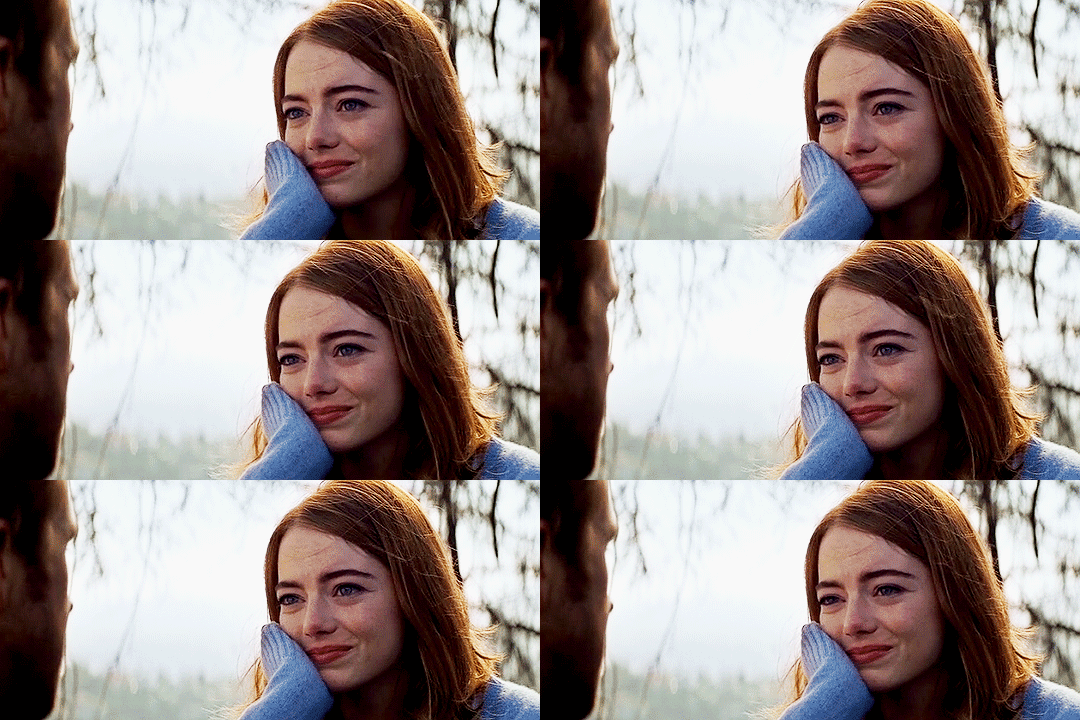
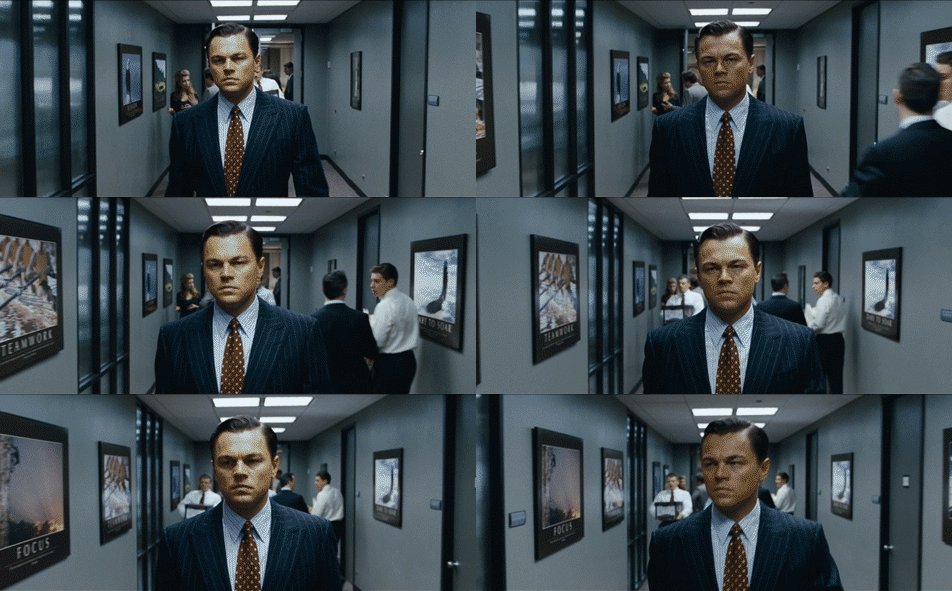
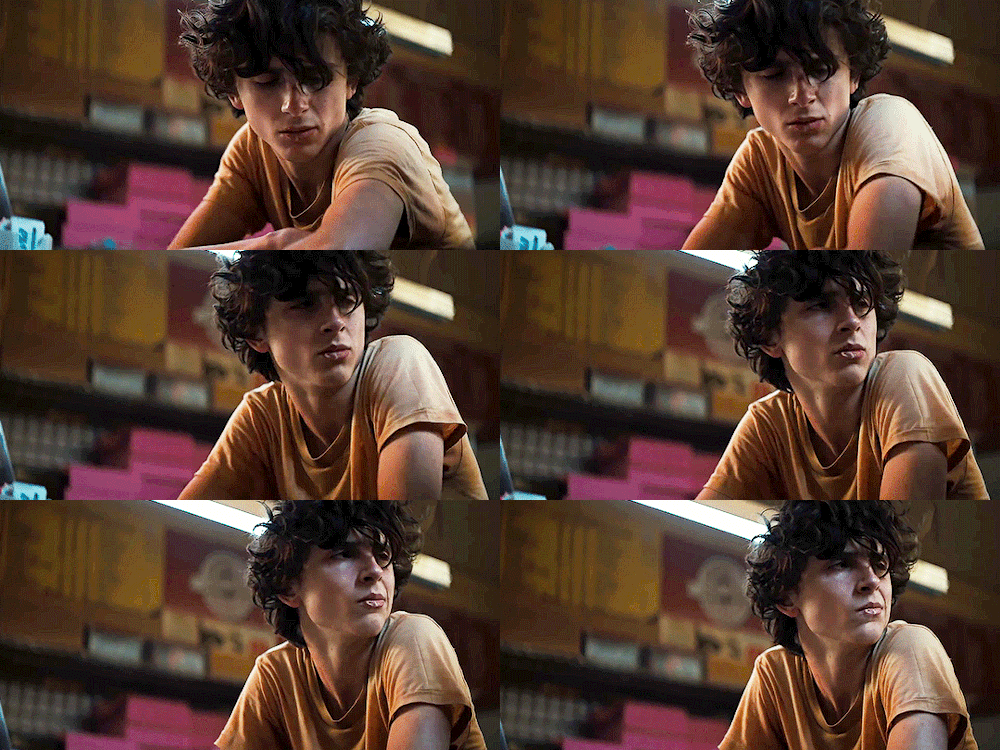
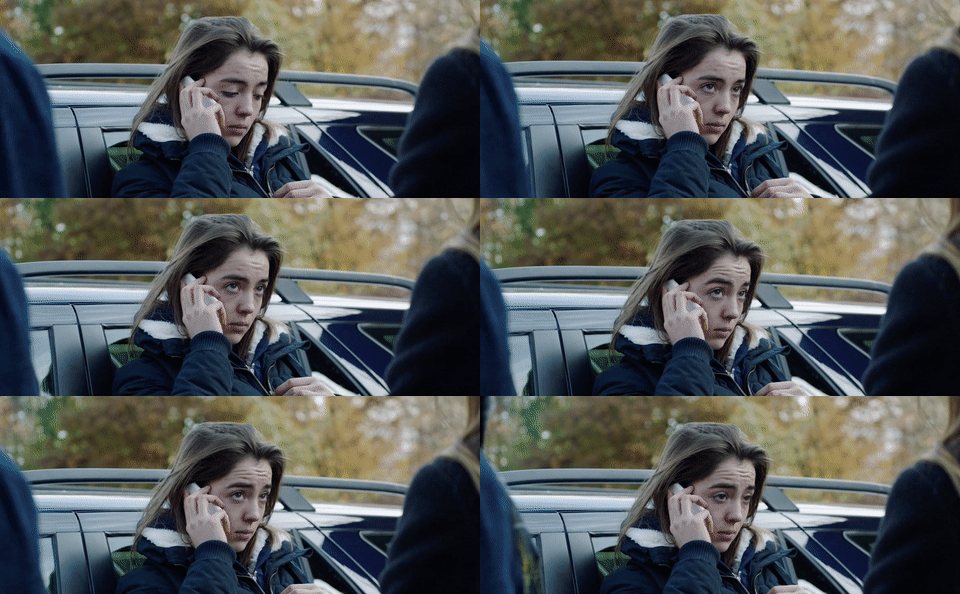
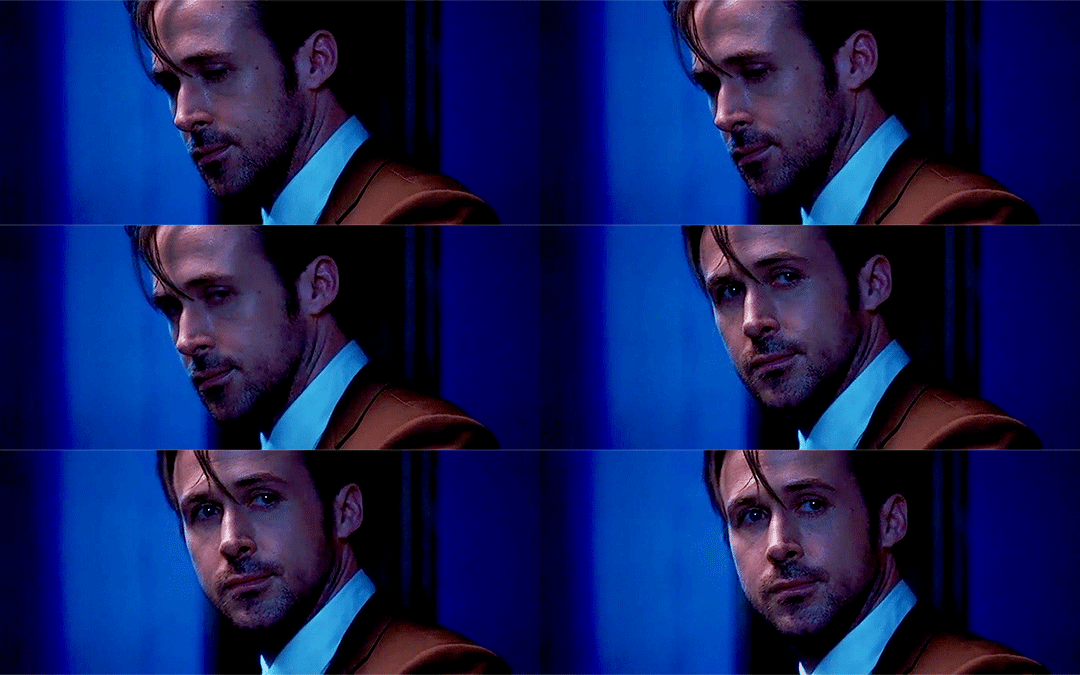
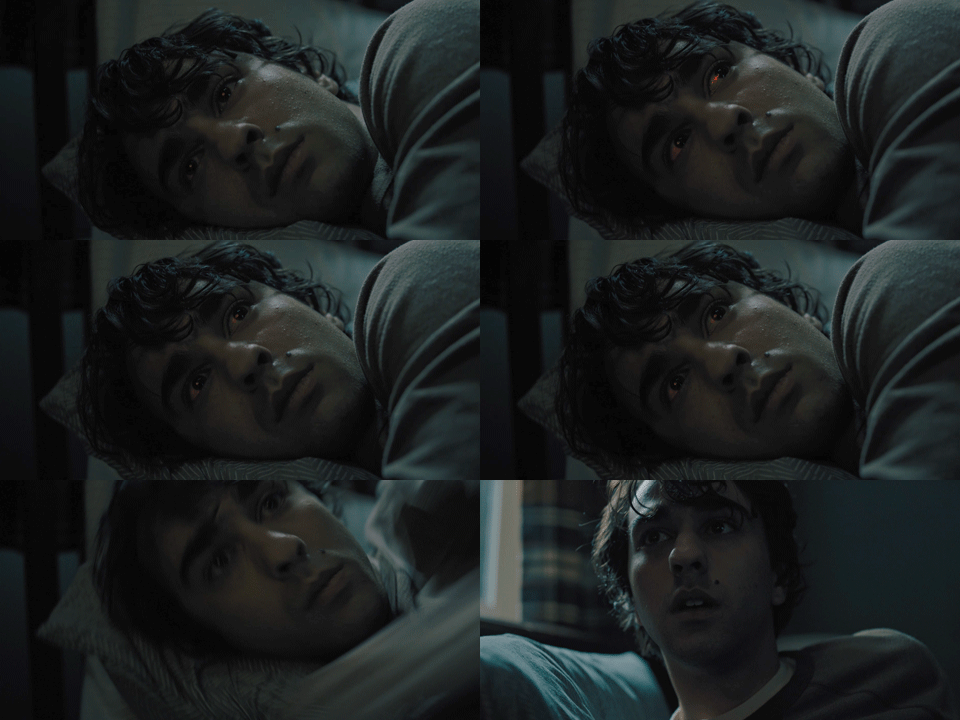
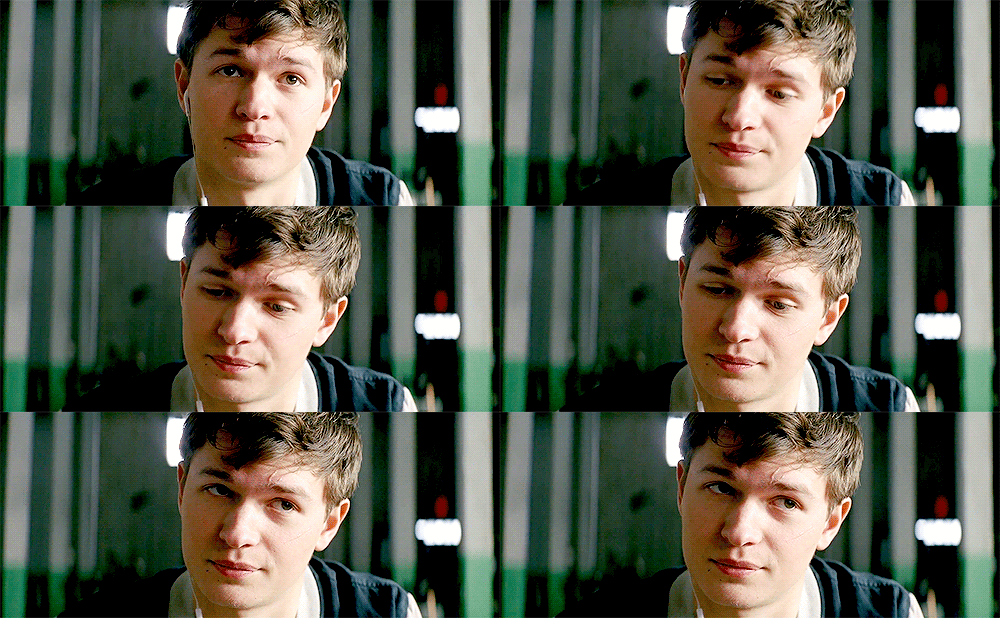
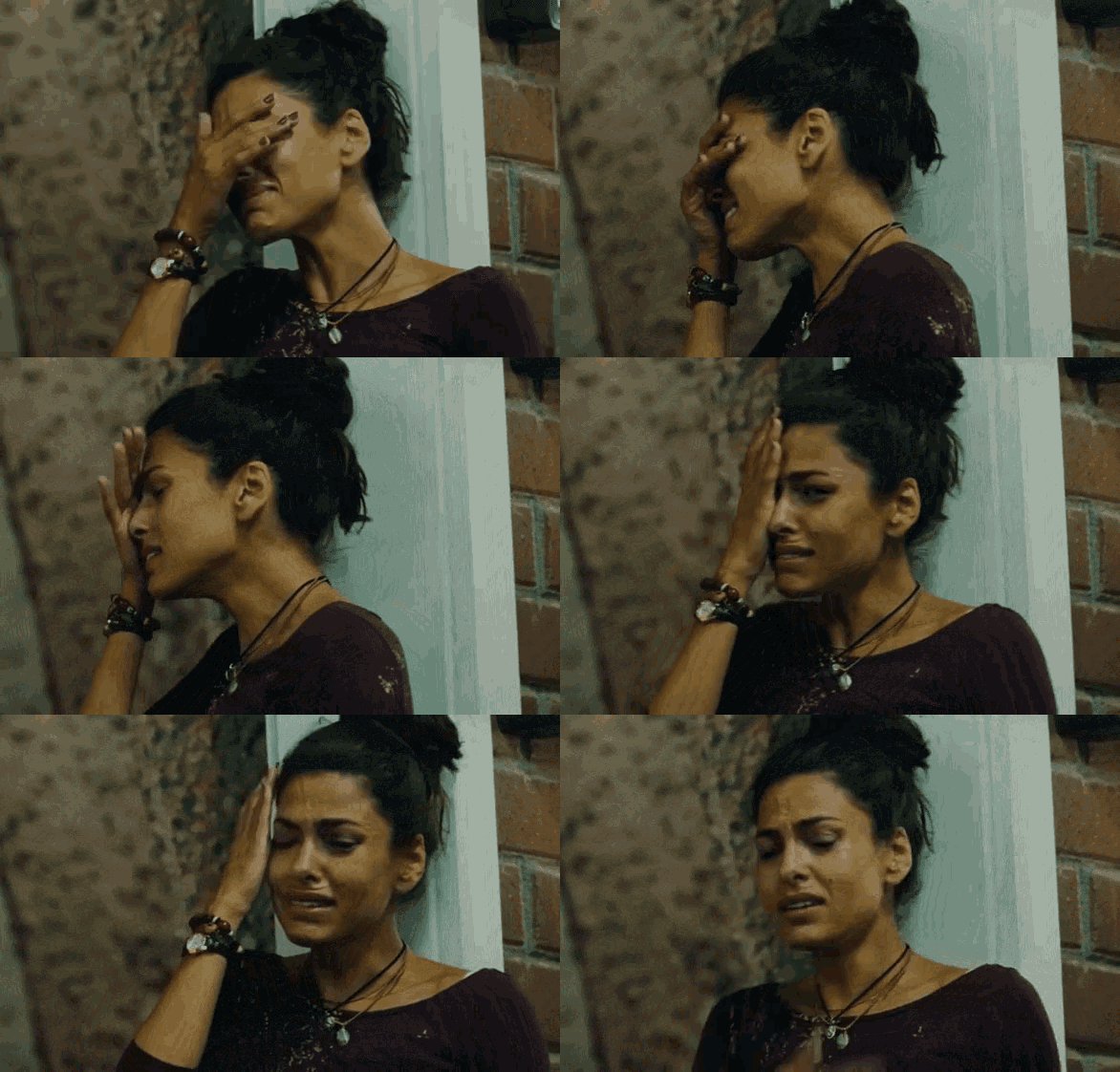
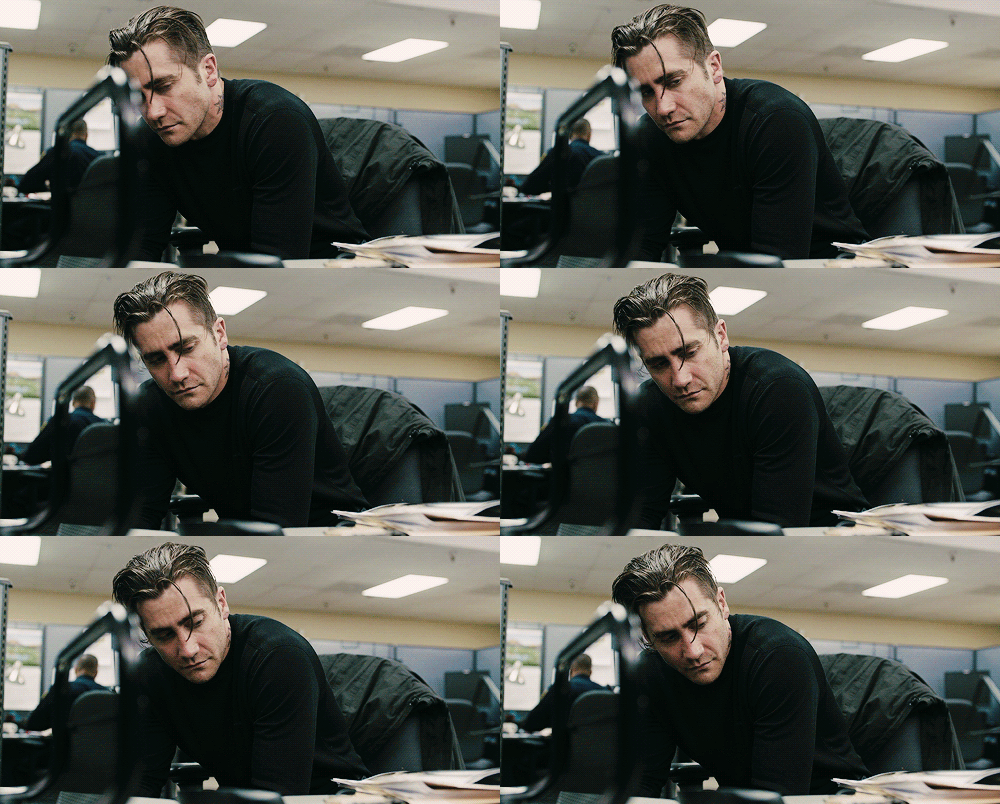
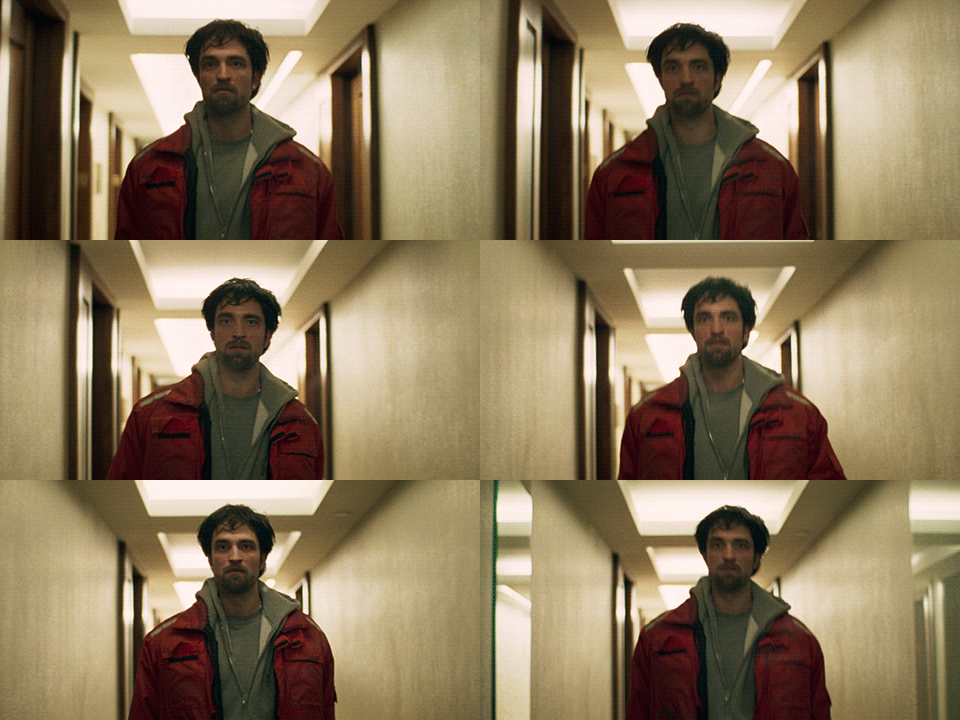
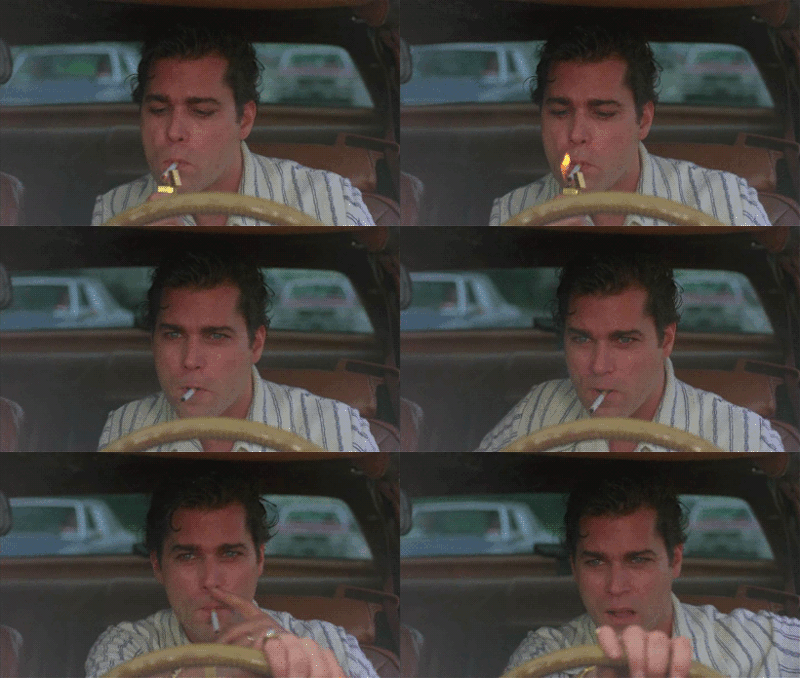
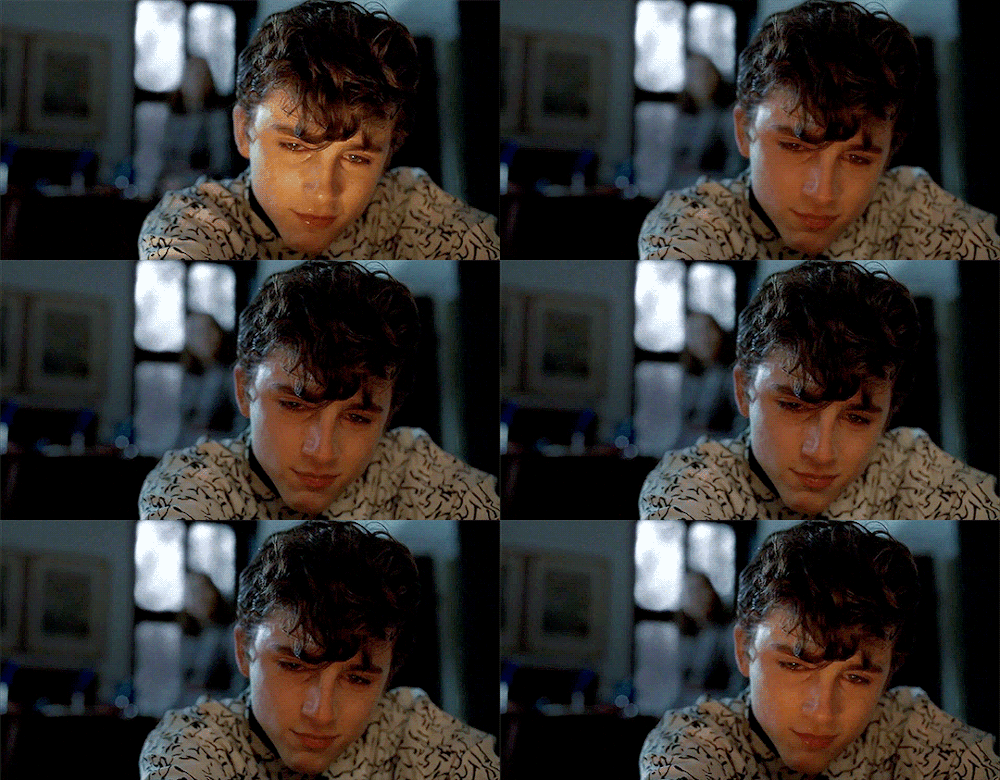
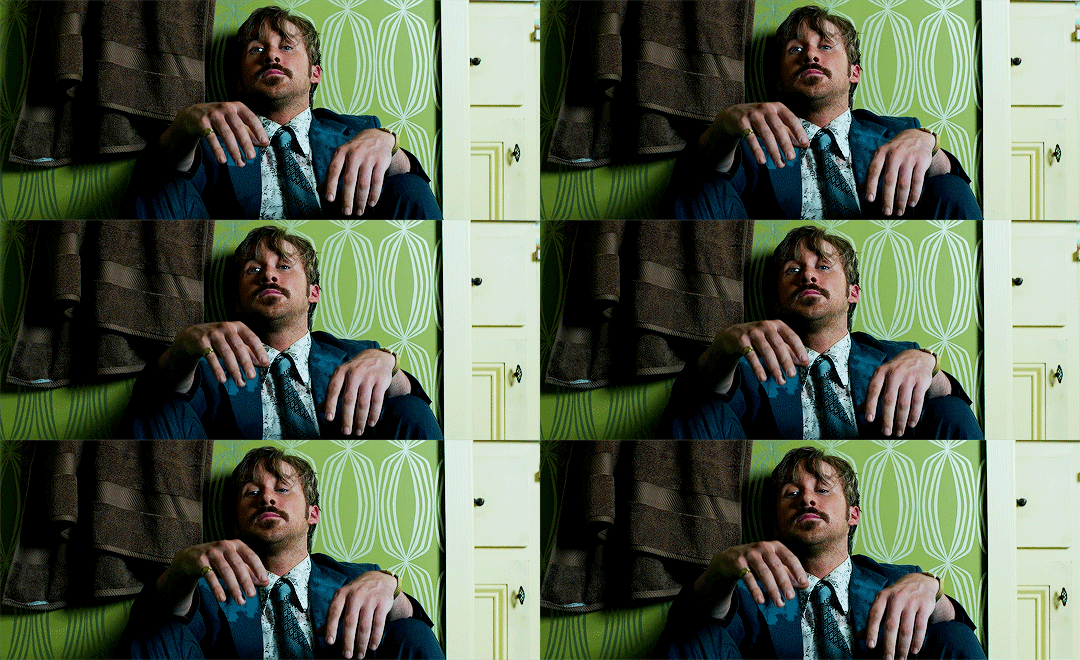
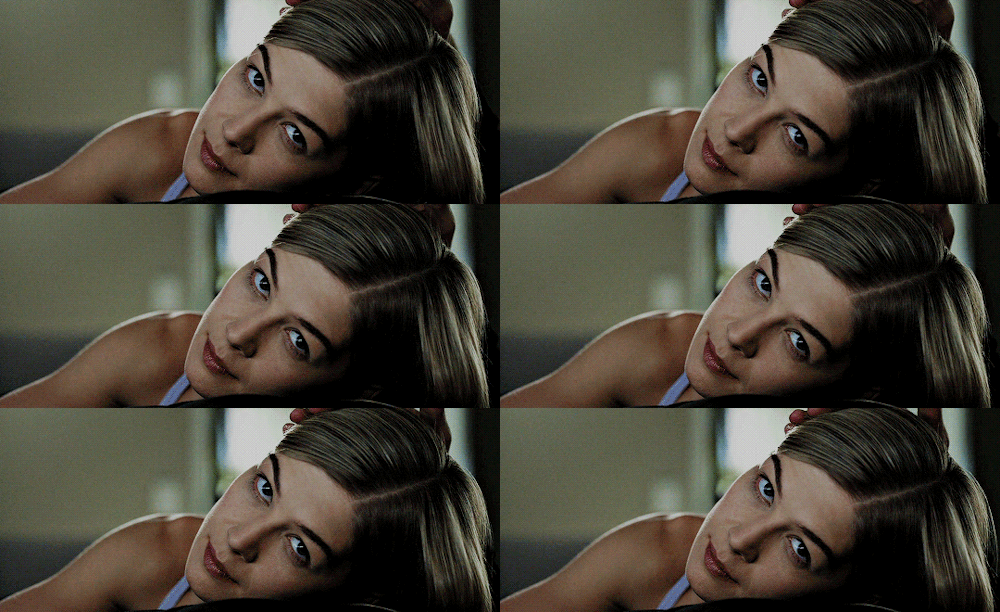
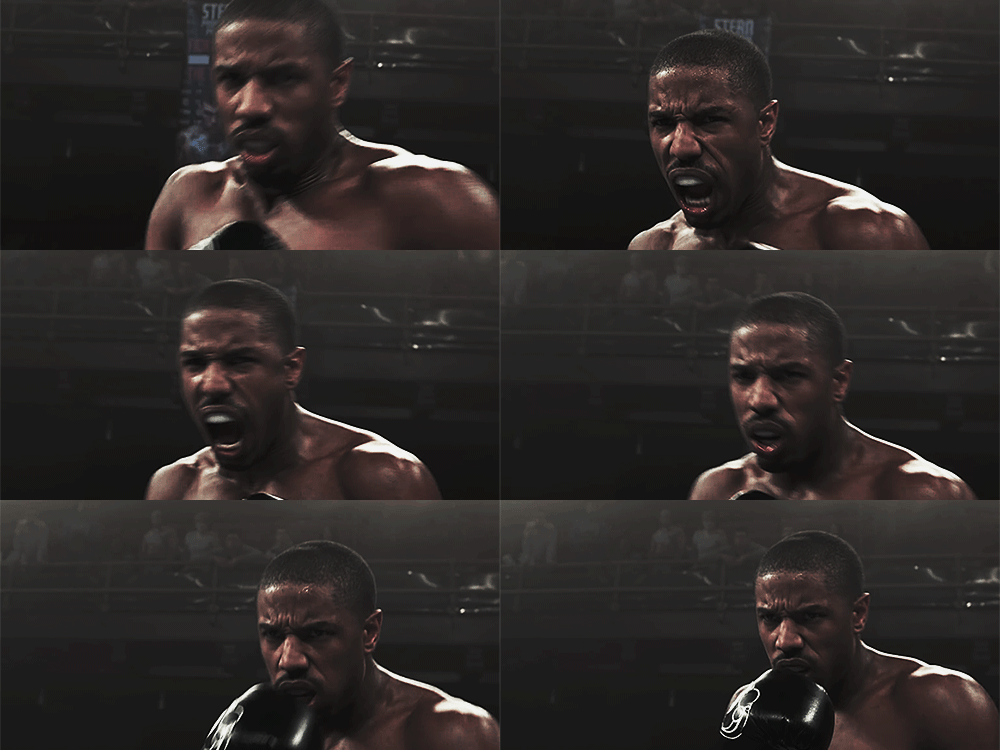
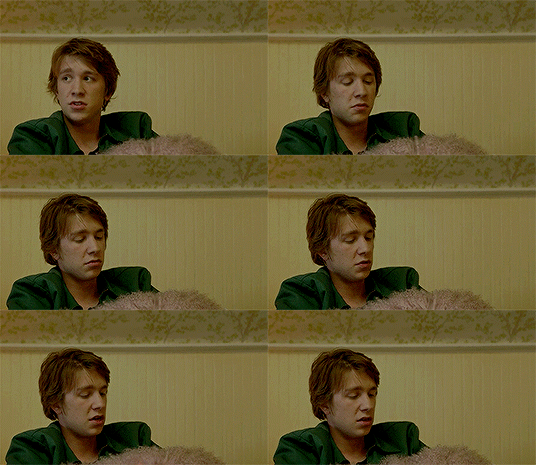
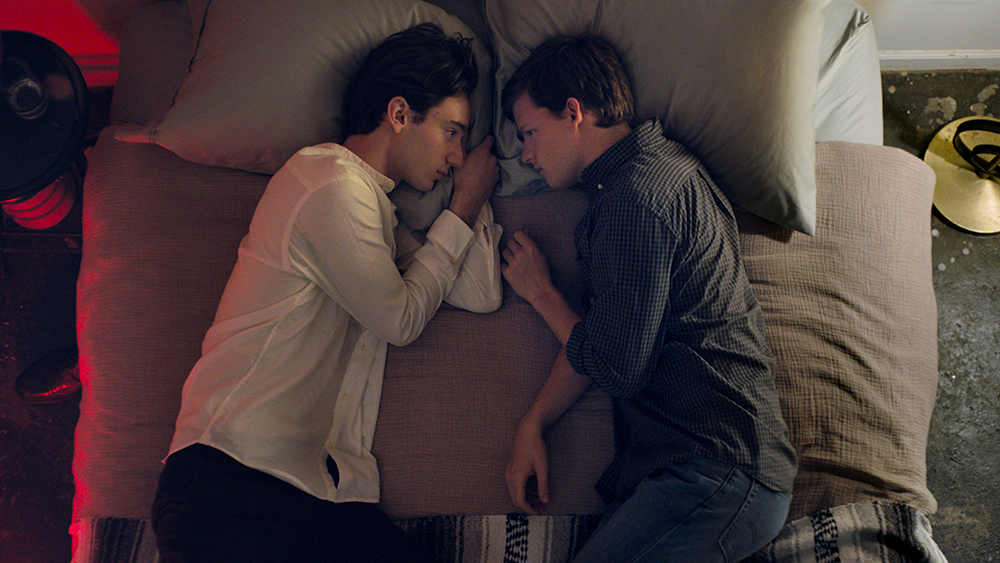
As an Australian, and a member of the LGBQT communty, this movie made me beam with pride. As it had a large Australian cast and was directed by Joel Edgerton, a filmaker I have admired for quite a while now. The story explored in ‘Boy Erased’ makes this even more of an achievement. It is no easy story to tell, and it was done so raw and realistically, I walked out very happy and satisfied.
I was thoroughly impressed with a lot of the cinematography in this film. The shots were constantly well crafted and created a very dull atmosphere, which suited the story perfectly. The colours were extremely symbolic, a lot of red being shown to symbolise hell and then light to contrast as heaven. This refers strongly back to the notion of “gay people going to hell” and “being straight sends you to heaven.”
Speaking of this notion, a part of the story I found very interesting was the battle we saw Jared have with wanting to be loved by his parents but also wanting to love the same sex. This war occurring in his brain is a war that not only religious LGBQT people go through, but all LGBQT members do. The way it was explored was amazing, and Edgerton took great care in making sure he did it right. Some gay coming-of-age films such as ‘Blue Is The Warmest Colour’ and ‘Call Me By Your Name’ have stirred up some debate in the LGBQT community as they were both over-sexualised. The main focus of these films was the “sexual coming-of-age” aspect, and less of the actual “coming-of-age.” Whereas ‘Boy Erased’ was about Jared accepting himself and growing into the man he wanted to be., even with the all of the odds against him. Which is something all LGBQT members have to go through.
“I love God, but I also love my son,” was a line of dialogue spoken by Nicole Kidman that had me in tears. Take into consideration this was all a true story, it helped me feel connected to all these characters. So the fact that Jared’s Mother in real life, portrayed by Kidman in the film, accepted her son and believed the literal hell he was going through at the conversion program, will give hope to a lot of young people watching the film also struggling with the whole “coming out” process. In LGBQT films it is so important for representation of parents who are loving and accepting, this was also well done in ‘Love, Simon’ (2018).
Recently, LGBQT films have started to get it right. Showing the struggles in a raw and realistic way, not over-sexualising the community, and showing parents that can put aside their differences and love their child for who they are. These are just some of the notions that we need more and more of in these kinds of films, and I am proud to say that Joel Edgerton nailed it. The story is compelling but also comforting, and I highly recommend seeing this one before it leaves your local cinemas.
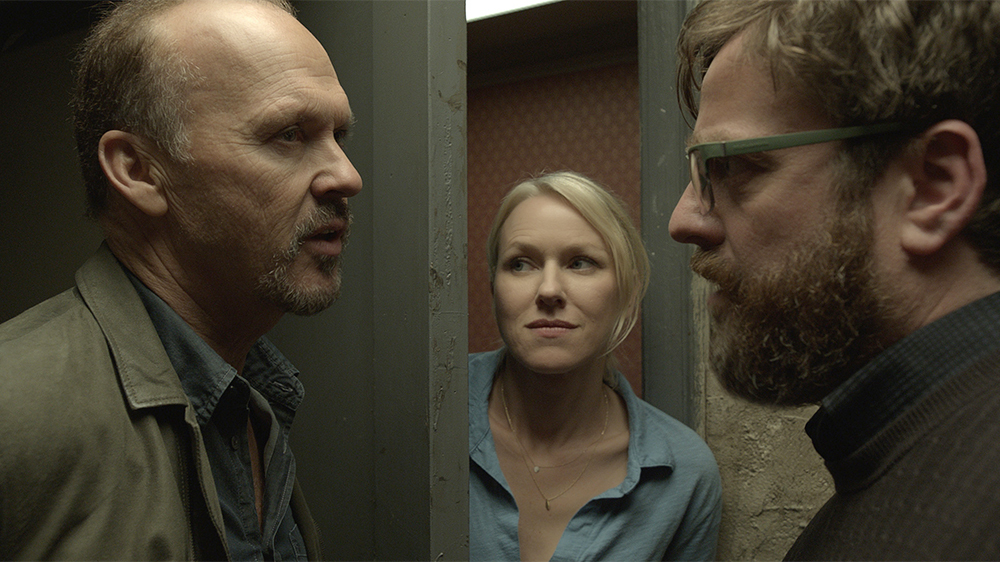
I just watched ‘Birdman’ and after a few moments of sitting back and reflecting… I finally understand why it was nominated for so many things and why the film is so reflective of our current generation.
Personally, the camera work in ‘Birdman’ isn’t just incredible in a technical sense but extremely symbolic. Choosing to have most of the film appear as one long take was no mistake, and I believe Iñárritu chose this technique to reflect on the notion that life is never ending. It is a constant battle. Real life never stops. Never ever. And ‘Birdman’ portrays this not only through the story, but through the camera techniques. I felt very connected to Thomson as we watch life just brutally attack him and he just never catches a break. This approach is realistic and honest.
One scene that really reflected this is when Thomson was walking through the streets and there were explosions, superheroes and helicopters all buzzing around while Birdman is over his shoulder taunting him. All mainstream movie-goers want is a huge blockbuster that isn’t too hard to follow, and ‘Birdman’ crushes this concept. It does this by making our protagonist be someone who has had blockbuster films ruin his life. Thomson wants to re-start career through this play he is creating… but it is Birdman and the entire concept of “blockbusters” that constantly taunt him and are trying to lure him back into a life of “easy money,” because as well know, blockbusters are guaranteed to make a huge profit and be a hit at box offices. Where as films that discuss an interesting story, or films that are a sometimes the tiniest bit unique, absolutely flop at the box office. Film nerds love them, and they are most of the time brilliant, but it is the competition with blockbusters that is the reason they are never successful, and ‘Birdman’ tries to make this notion more aware.
Thomsons’ past of this major role he played is quite literally following him through-out the entirety of the film. We quite often see Birdmans figure lurking over his shoulder and hear his voice and taunting Thomson. As individuals, we all can’t help but let the past effect us and haunt us. But the fact that Thomson used to play such a successful role in such a successful blockbuster, he can’t help but think that he is never going to achieve greater than that. Birdman literally represents his doubts and fears of trying something new as he tries desperately to get this play to work and be a success. Yet it is just falling apart around him. We can all relate to this concept, and I believe through this we can really connect with Thomson and all these struggles we watch him deal with.
‘Birdman’ is filled with symbolism, metaphors, relatable struggles and constant digs at the film industry. It is such an important film, and one that any film lover will go back and re-watch, and adore more and more every time.
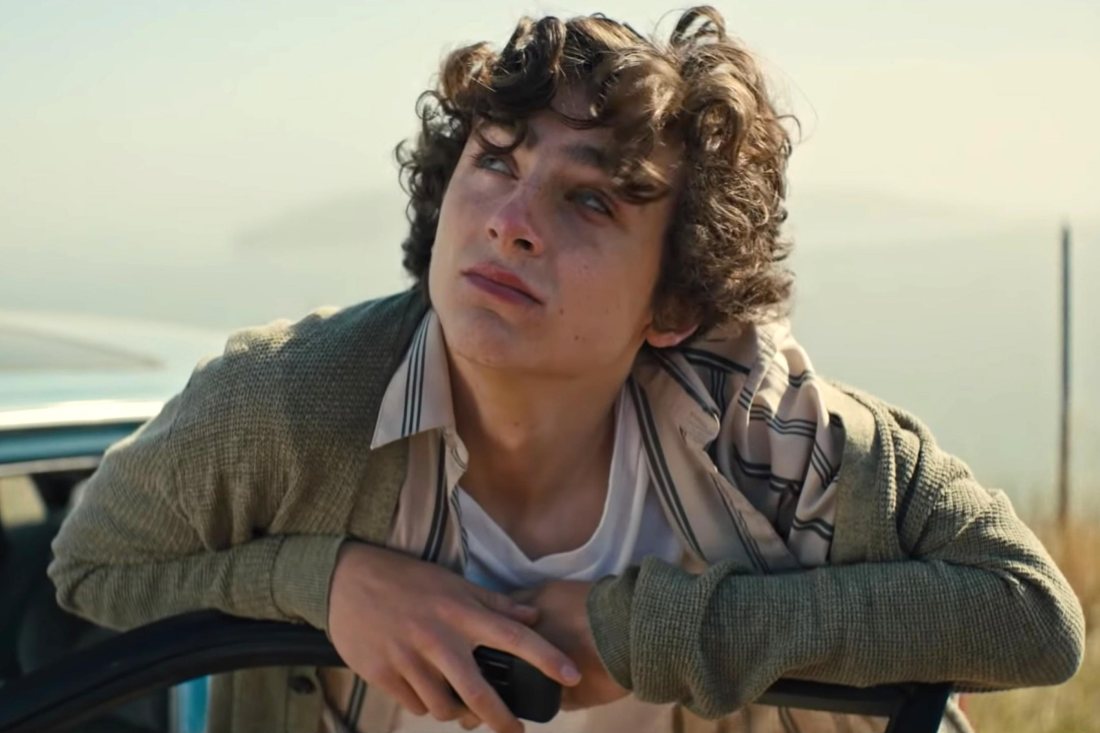
I saw this alone because none of my friends knew about this film and they didn’t seem very interested. It also had a low score of 68% on rotten tomatoes. But never-less, I booked a ticket and went out of my way to go and see it, and I was pleasantly surprised.
I don’t know why this movie is not getting as much appreciation as it deserve. It is nowhere near being a “bad” or “average” film. I have seen some critics call it “average” or “repetitive”… But what they don’t understand is that this film is trying to portray how repetitive drug use, rehab and relapse is. People struggling with drug addiction don’t just wake up one morning, stop, and never touch them again. It is no where near that easy.
The repetitiveness is one of the reasons I liked this film as much as I did. It was emotionally draining to watch the same occurrences happen again and again to not only Nic, but to his entire family. These feelings replicate what it must feel like to have a relative struggling with this problem and trying to help them overcome it; frustrating and draining.
This was a very important story to tell, and Groeningen told it in such a brutal and real way. The fact that we got to see this all unfolding from the parents perspective was a unique point of view which I believe is rare to see in films discussing this topic… So that was extremely refreshing. There was no glitter or pot of gold at the end of this rainbow. It was honest, harsh, and upsetting. Which for me personally, is the best way to tell these true stories about real people who are still going through these exact problems in real time. Glorifying these “addictions” and making the lifestyle look amazing is something many films have done in the past, and I completely adored how raw ‘Beautiful Boy’ was.
The only problems I really had with the film was that it was a bit long and the pacing was off… and in certain scenes Steve Carrell reminded me a lot of his comedic roles due to his sometimes “obnoxious” yelling. But these are some flaws that can be over-looked and I can still see an underrated film filled with amazing performances from every single cast member.
I do recommend giving ‘Beautiful Boy’ two hours of your time. It will not only change your perspective on those struggling with these “addictions,” but make you admire the parents and family surrounding them as well.
Here’s a list of films I find people have constantly over-looked and under-appreciated.
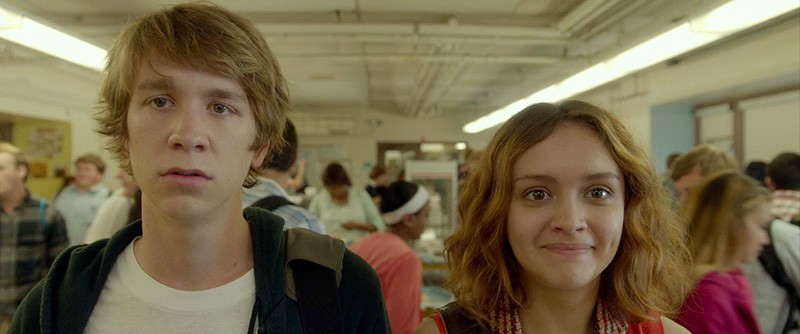
1. Me And Earl And The Dying Girl
dir. Alfonso Gomez-Rejon
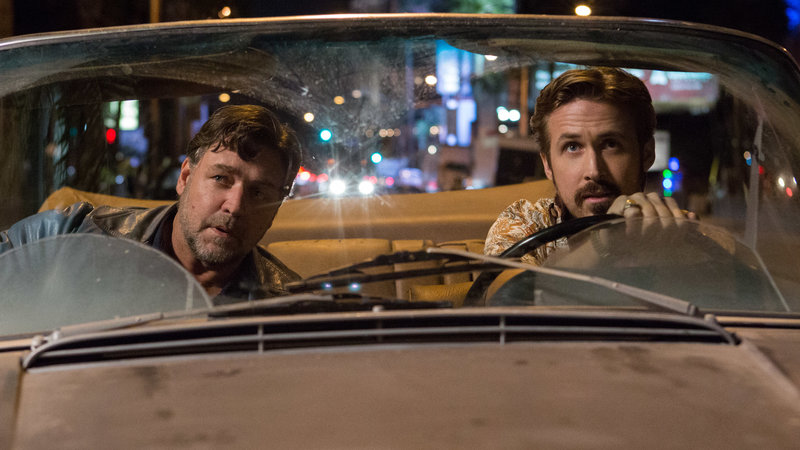
2. The Nice Guys
dir. Shane Black
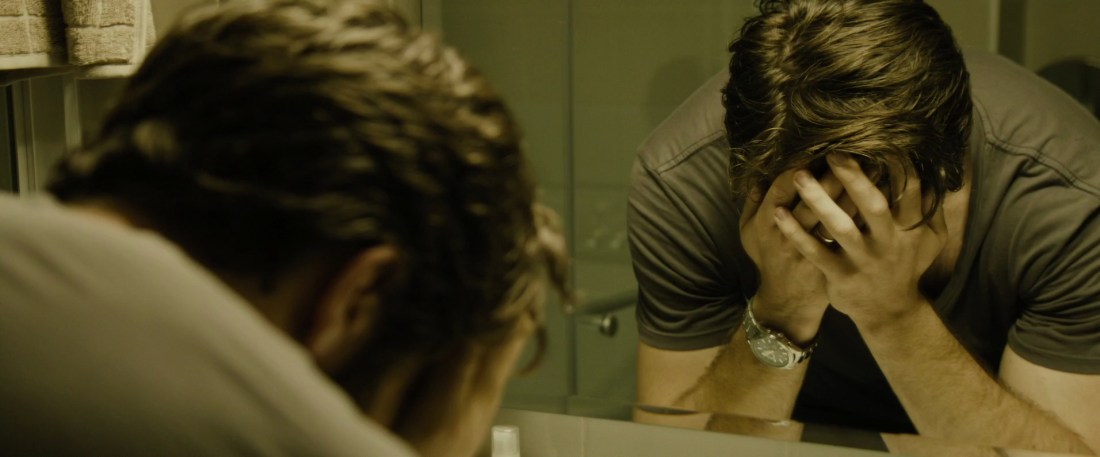
3. Enemy
dir. Denis Villeneuve
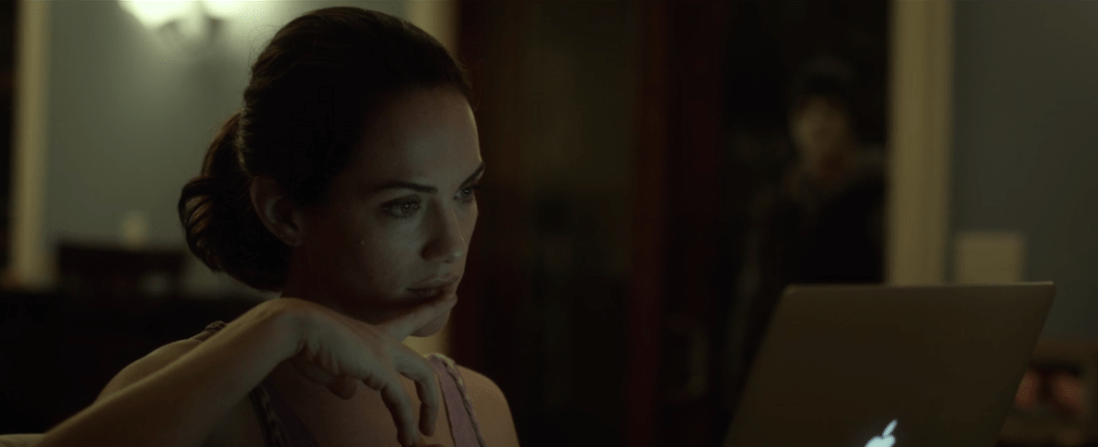
4. Hush
dir. Mike Flanagan
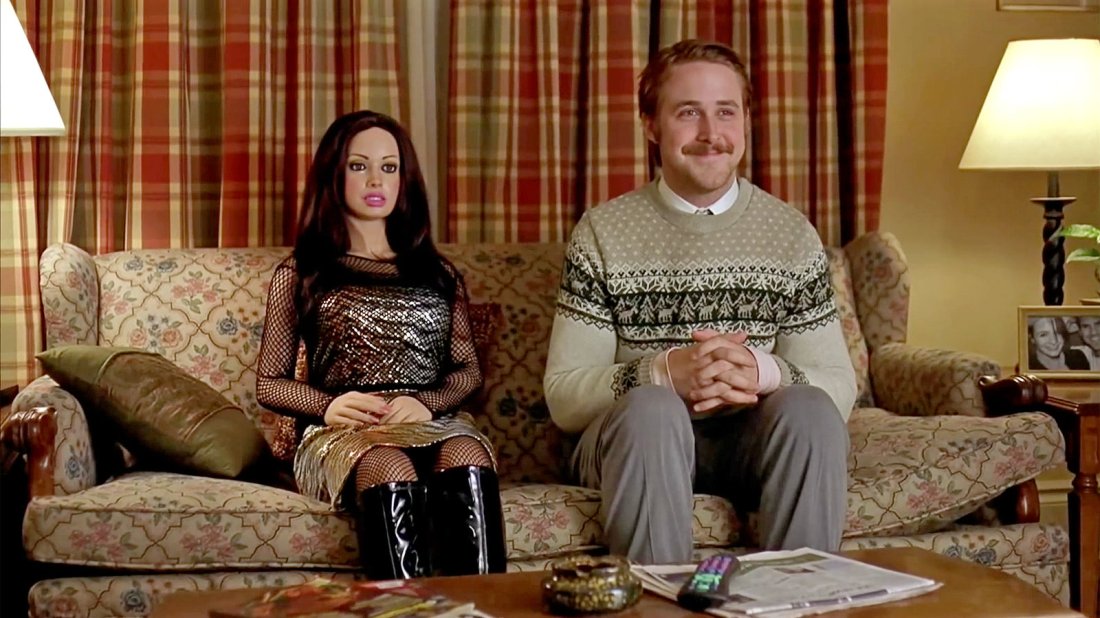
5. Lars And The Real Girl
dir. Craig Gillespie
I sat down before viewing ‘Sacred Deer’ knowing what to expect but also very excited. I had heard good things about this film but I had also watched some of Yorgos Lanthimos’ films in previous times and did not enjoy them… But this was the delightful opposite.
When I watched ‘The Lobster’ I was slightly dis-pleased and actually turned off the film half-way through as I just could not connect with the story-line or characters what-so-ever. The way Lanthimos makes his characters appear as dead-pan is an interesting technique that personally worked for me in this genre. It made the entire experience more uneasy for me as all these characters almost had no emotion even though what was occurring around them was disturbing and terrifying.
The cinematography blew my breathe away. Some incredible shots from a birds-eye view perspective were extremely clever and really captured everything the audience needed to see in that certain shot, in an aesthetically pleasing way. The cinematography also added to the discomfort of the film, as many shots had just one major conflict occurring in the centre of frame with all of this space surrounding it.
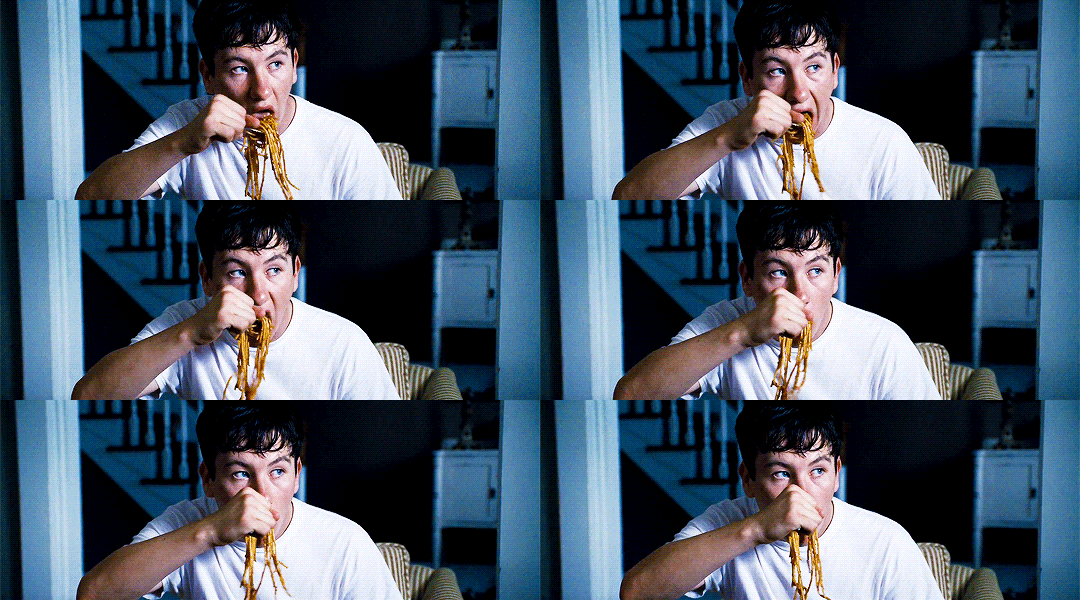
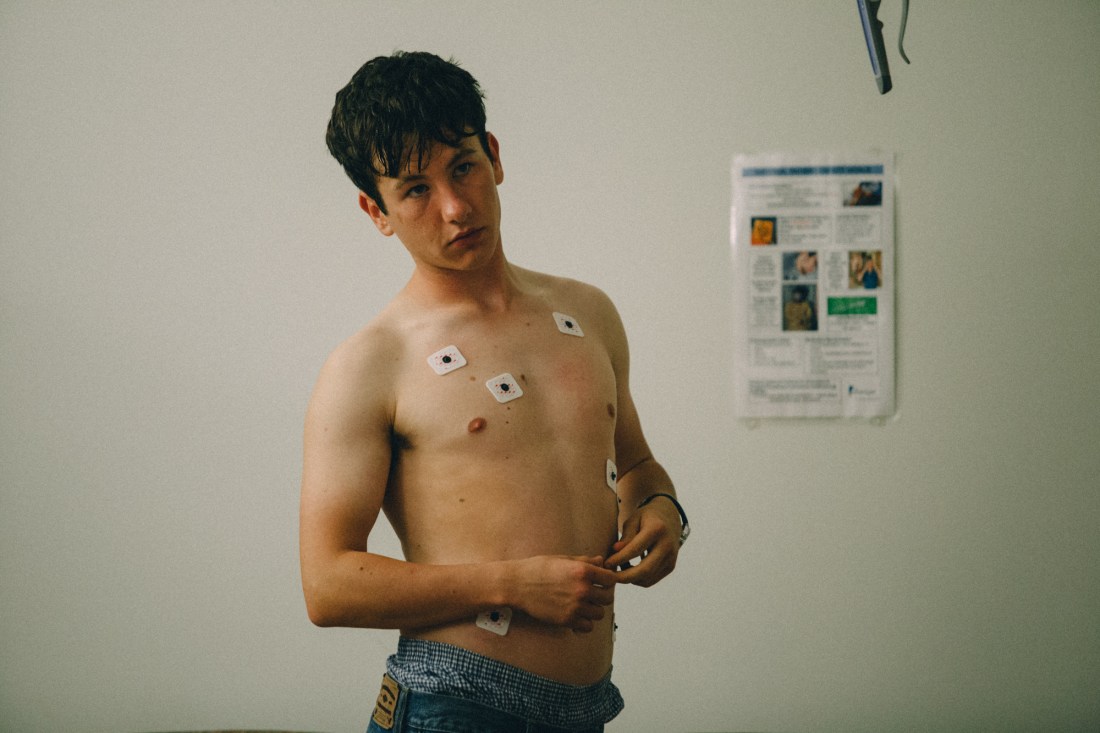
I have to praise Barry Keoghan for his performance in this. I absolutely fell in love with his acting in this role, he just blew me away and nailed the disturbed character of Martin. The child-like voice he put on and his innocent features created this character to be someone easy to sympathise with, but also become angered by.
The discussion of sympathising and becoming angered by characters leads me to my next point… There is no good guy and bad guy in this film. [SPOILERS] Dr. Murphy is no-one to idolise. As audience members, we are so used to teaming up and cheering on our protagonist. But ‘Sacred Deer’ really flips this whole concept upside down. Dr. Murphy is a horrible person that did a horrible thing to Martins father. As cruel as Martin is and the things he puts this family through. His motivations are understandable, and at times I did find myself rooting for him and wanting him to receive his well-deserved justice. It is very rare to find yourself cheering on the antagonist, but during ‘Sacred Deer’ I was. That’s why I believe this film effected me as much as it did. All characters were not these amazing and glorious human beings… It reminded me a lot of ‘Drive’ (2011). In the fact that you find yourself cheering for Driver even though he is doing all of these horrible things.
Overall, this film was very impactful and has already joined the list of my favourite horrors. I strongly recommend checking this one out.
I haven’t sat down and have a film affect me this much since the release of ‘BlacKkklansman’ in early August. From what I had heard about ‘Raw,’ I was not the most excited to sit down and watch it. Hearing that people had passed out while watching it at festivals, and others leaving due to being so appalled by it. I was immediately intrigued but also nervous. So, with one giant deep breathe, I delved into the world of ‘Raw,’ and as the credits rolled, I noticed hadn’t been more excited to discuss a film in quite a while.
As shocking as this film was, it was weirdly comforting. Following Justine through this gorey and horrific journey of self-discovery provided this odd style of comfort to the film. Even though it is her process of growing into a raging cannibal… I could still relate to her? The feelings I felt while watching this film confused me and concerned me… and that is why I think the film effected me as much as it did. As someone who is also going through the process of finding myself and learning, I felt myself in Justine’s shoes. (Besides the craving-human-flesh aspect… of course.)
The themes explored in ‘Raw’ such as growing, self-acceptance, and family, makes ‘Raw’ so much more than just a cannibal horror film. If you go into this film with this mind-set, you are only going to get so much out of it. If you try and forget about the whole cannibal aspect, this truly is just a story about two sisters trying to bond, compete, and survive the whole concept of “growing up.” Ducournau could have made a gorey and disgusting film that got society talking, but adding these plot points and character traits really changed the whole experience, and I admire her a lot for this.
Garance Marillier’s performance in ‘Raw’ was haunting and mesmerising. I found myself just sitting there and adoring her talent and she really knocked this role out of the park. She really is one to keep an eye on. Overall though, all of the performances were extremely well-done.
Julia Ducournau directed this movie in such a beautiful way. Every shot, every scene was so detailed and beautiful to look at. I quite often found myself not being able to tear my eyes away from the screen, even throughout some of the more “gorey” parts, and I think that’s why this film is so unique and amazing. Ducournau made the most vile concepts somewhat beautiful to watch. Whether this was through the colour, the camera angles, or the score (may I add that the main title for ‘Raw’ is absolutely haunting. Listen here) the entirety of this film was utterly hypnotising.
I am still in complete shock over this film and every time is crosses my mind, I find myself trying to unpack it and truly understand why it took such a toll on me. Maybe it was the graphic and confronting scenes. Maybe it’s the fact that I started to sympathise with Justine. Maybe it was because I related to this cannibal-coming-of-age-tale. Either way, ‘Raw’ is a film that will stay in your weeks after watching it.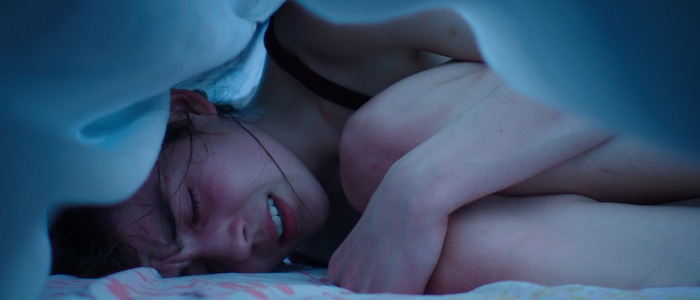
SPOILERS AHEAD:
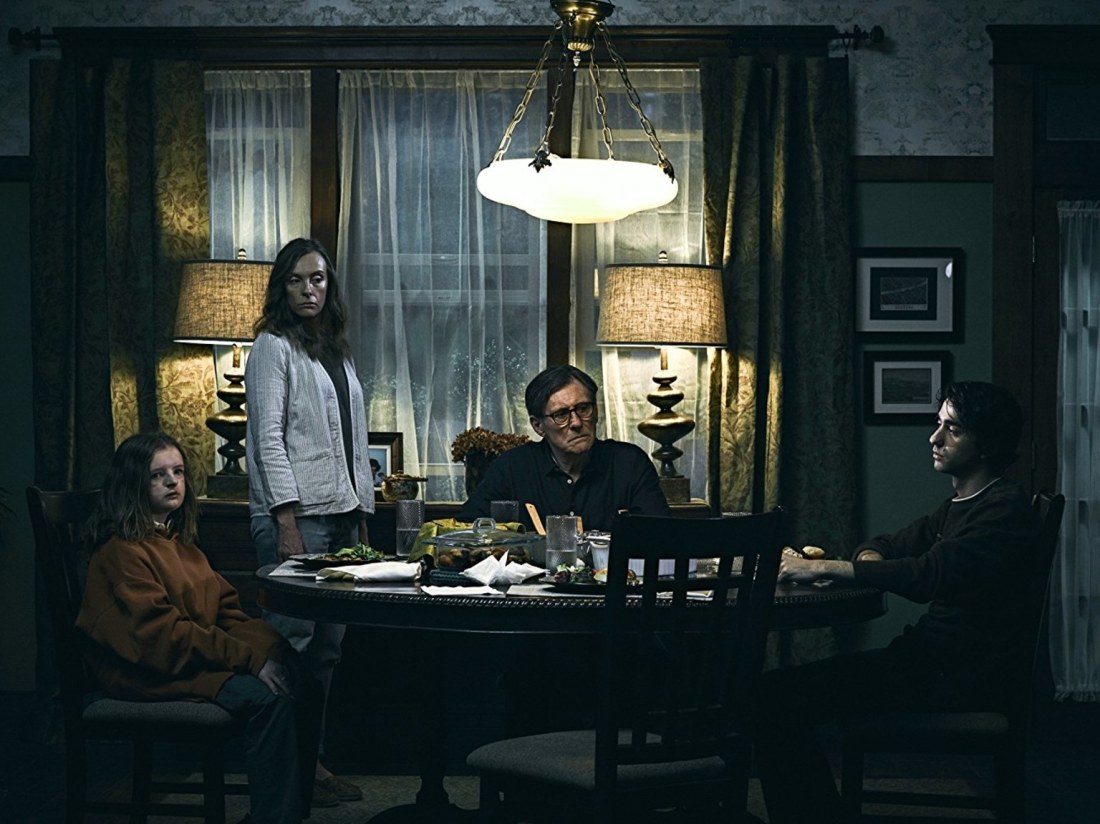
I saw Hereditary on it’s opening night here in Australia, and walked out of the cinema absolutely captivated and in shock. My friend on the other hand, hated the film and found it quite boring. In this post I want to delve deeper into the reason why ‘Hereditary’ has 89% on rotten tomatoes, but only 66% of the general public enjoyed it.
It is not your conventional horror film. Over the past decade or so, horror movies have turned into a jump-scare thrill rides full of throw away characters and cliche plots. Which boils down to films such as ‘The Nun’ and ‘Ouija’. These films provide us with what I like to call a “safe horror experience,” we know what is going to happen and know we will get a few adrenalin pumping moments from jump-scares and the tension that occurs before one. But that’s all these films can provide. ‘Hereditary’ is a slow-burning, tension-building film that is just absolutely brutal until the credits role. Mainstream audiences do not like this concept when they are walking into theatres to see a horror film, they just want an easy-going film with a few jump-scares and a CGI monster that appears on the posters. ‘Hereditary’ was the complete opposite, it broke every convention a “cliche” horror movie has.
The marketing of this film was also a downfall for mainstream audiences. The trailer perceives Charlie (the daughter) to be this creepy girl that is going to haunt and torment her family through the clicking noises she makes with her tongue. But when she is killed off forty-five minutes into the film, the audience realises this is not going to be your typical horror film, but a dark descent into a story about family grief and inevitable misery. Which personally, this concept is one hundred percent more terrifying than a monster under the bed or a scary-looking nun lurking around a church. Audiences went into ‘Hereditary’ expecting the opposite of what they got, which cause 44% of people to dislike the film, but it to be a masterpiece for critics and film nerds. The marketing could be criticised or applauded, either way, mainstream audiences were not happy with the film.
The film is also hard to follow at times. It requires thinking, focus and reading into things way too much in order to understand the crazy third act of the film. Mainstream audiences highly disregard films that are “hard” and require thinking, as they just want to spend their fifteen dollars to go into a film that is easy to follow and can have a good time watching. ‘Hereditary’ is the exact opposite to this, and what I think was a major downfall for mainstream audiences. But once again, this aspect of the film is why I adored it so much.
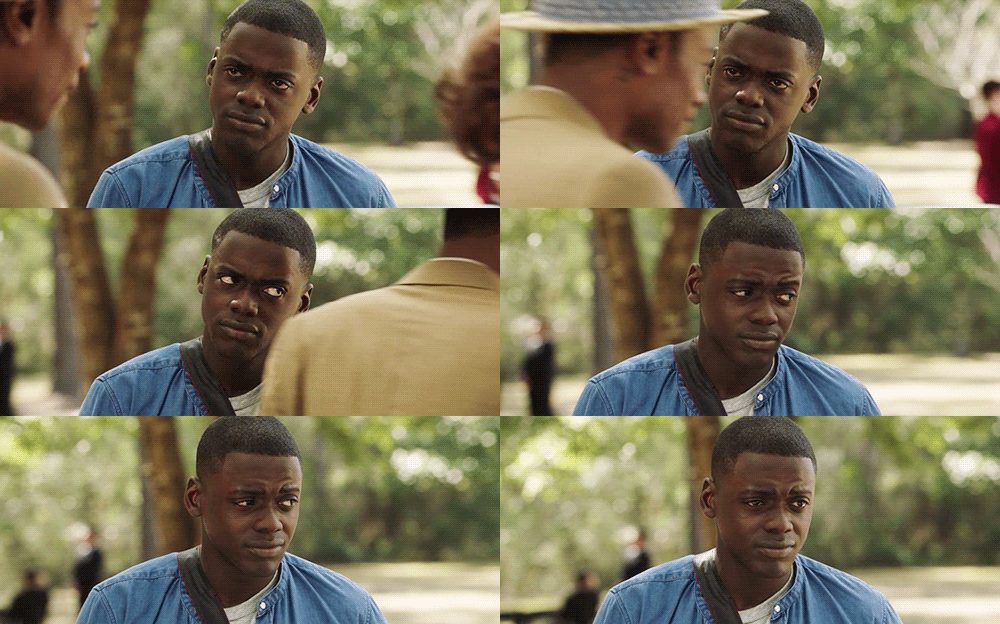
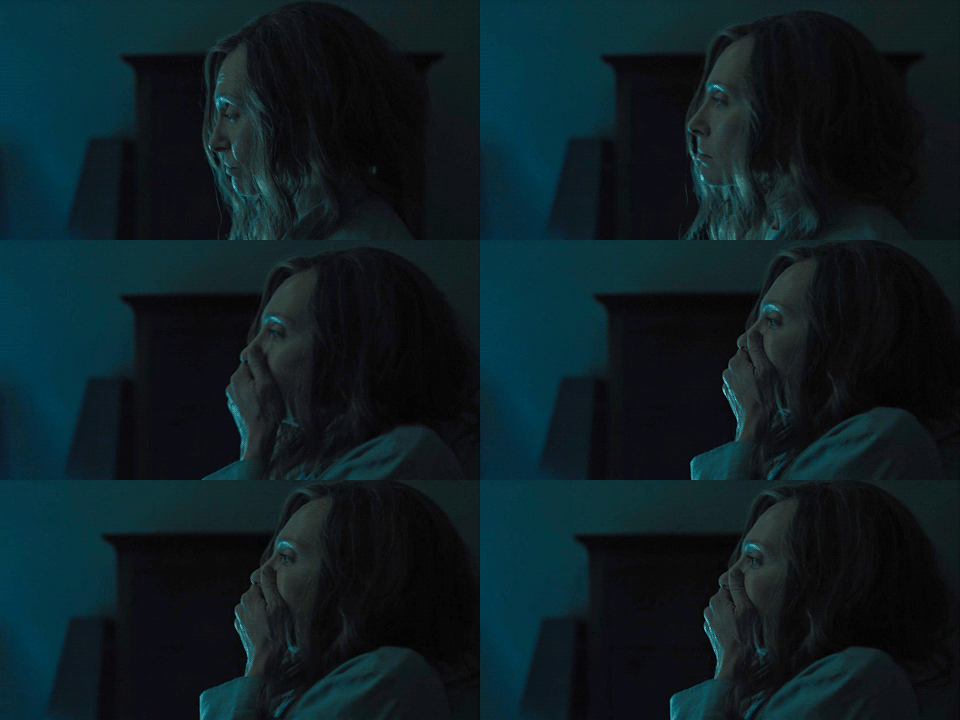
The performances were also breath-taking. Alex Wolff and Toni Collete really enhanced the experience through their haunting facial expressions and dialogue exchanged between each other. I highly admire Collette for her performance, if she doesn’t get nominated or recognised for her performance in this film it would be purely ridiculous, but the academy tend to look over genre films so once again it will go unnoticed. But what I saw was one of my favourite performances in a horror film, up there with Daniel Kaluuya in ‘Get Out.’ Good acting in horror films has started to be neglected due to the fact that audiences have grown to understand that these characters will all be killed off, and the director hires practically anyone that can just pull off the job. Aster blew off this concept entirely, and hired elegant and talented actors that portrayed their characters perfectly.
Ari Aster made a haunted house film that is emotionally taxing as well as terrifying, which I believe is what true horror really is. This concept for mainstream audiences is hard to swallow and almost too much to handle at times. When I walked out of ‘Hereditary’ feeling drained, depressed and scared. I knew it would be up there with some of my favourite horrors, such as ‘The Shining’ and ‘Get Out.’ I congratulate Aster for putting this film into the world, because not everyone loved it like myself, and other film nerds did. It was a risk, but I am so glad he took it.
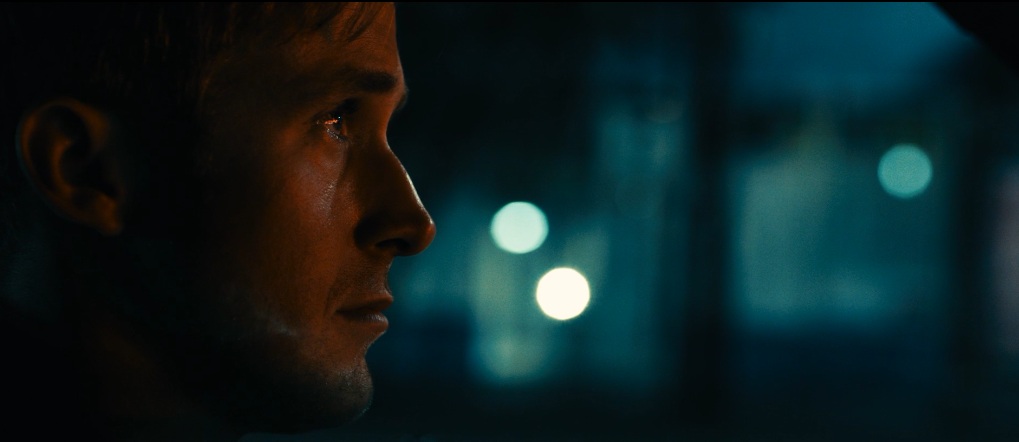
Drive (2011) is directed by Nicolas Winding Refn, and follows the journey of Driver, a skilled Hollywood stuntman who doubles as a getaway driver for criminals. He then starts to form a relationship with his neighbour and her son, and he begins to do anything if it means they are kept safe. Director, Nicolas Refn, quotes himself that “this is not a car movie, it is called drive but it is more about a man (Ryan Gosling) who realises he was made for something else, like a superhero.”(September 20th, 2011) Drive (2011) Featurette: Nicolas Winding Refn. Retrieved from https://www.youtube.com/watch?v=0BgJ1zJ6Qmg . The impression that “drive” is only associated with cars or transport, is completely disregarded in this movie, and the word means so much more. Monsters can sometimes be the real heroes, is the major sub-text hidden behind the aggressive tones in the film. The cinematography, editing, mis-en-scene and the use of sound in this film further influence and display the concerns Refn has. The first half of the film starts off as a fairy-tale love story, but that all changes when the audience see’s Goslings character turn, quite literally, into a violent gangster.
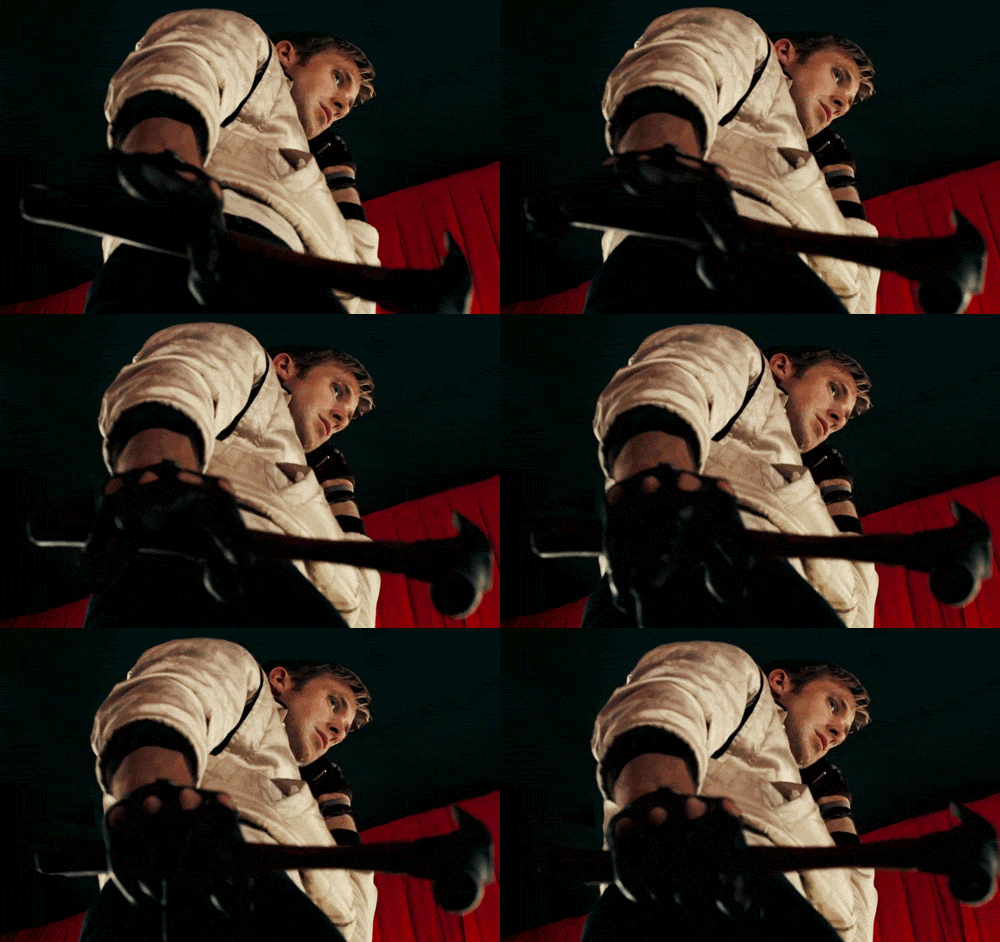
A scene which is primal to the sub-text is a scene in which Driver goes to visit one of the members of the mob to find out who’s money he has. It then becomes very violent when Driver smashes the other characters fingers with a hammer, then pushes him onto the ground and demands him to call Nino, or he will continue to hurt him. This is not the first time the audience has seen Driver act so brutally towards an individual, but it is still confronting as the violence, use of camera angles and sounds further imply the sub-text. Some of these sounds being as subtle as the calmness in Goslings voice, to the violent yelling of his victim with the tense techno music in the background. This creates tension and fear in the audience as we are only just now starting to see what Driver really is capable of. This scene is also being shot in a stripper club, so the thudding of the music not only adds to the atmosphere but also symbolises the thudding of the audience’s heart. There is another shot of Driver carrying a hammer, but it is angled up. Driver really is the one in power and in control of the situation. The audience is peering up at him, showing his dominance of the scene, as an entirety. Red is a re-occurring colour in this scene, and it is most significant when Driver walks into the dressing room, the walls are covered in brick but the doorway is covered in a red sheer curtain, which is symbolic due to the scenes savage tones. Red symbolises love, anger and violence. Driver is quite literally walking into his violent self, further relating back to the sub-text, in which Driver is turning into a monster, in order to be the good guy in the situation unfolding.
Irene and Driver’s relationship is established early on in the movie. The very first elevator scene where they are slightly smiling at each other, then when Irene’s car breaks down and Driver drives them home. Their secret love and bond progresses very fast, and this is due to Driver’s loneliness and isolation from the world. At the very start of the film a shot of Driver looking out at the world from a window, and then this exact shot happens again later on. Exhibiting that Driver is always looking out at world, he never really is a part of the world, or anything else. When he finally gets the opportunity to be a part of Irene’s small family, he leaps at it and becomes attached. It is this family bond which turns him into the beast that has always been hiding deep inside of him, because he wants the best outcome for them. “The uneasy combination has made Driver one of the most compelling, original and utterly hypnotic movie characters in recent times,” quotes Erin Free in (May 24th, 2016) Character Piece: Driver. Retrieved from https://www.filmink.com.au/character-piece-driver-ryan-gosling-in-drive-2011/ . Irene is also a very quiet character and there are rare accounts of dialogued passed between the two. A scene that displays this is when Driver is fixing a car piece in his small, empty apartment, the music booming from Irene’s apartment, full of people and colour. A song singing “you keep me under your spell,” plays as they both stare off into space. It cuts back and forth to the two characters and there is no dialogue needed, and instead of words being spoken, there is symbolism and music instead. Refn made Driver’s apartment dark, with barely any props inside of it as to represent how empty Driver’s life is. When in comparison to Irene’s apartment, with warm vibrant colours and many props that personalise the environment, like family pictures and toys. Now that Driver has found such a warm environment, he is willing to do anything to make sure it stays in his isolated life, but it is this notion that turns him into the beast he was bound to come.
The last elevator scene of the film strongly suggests the sub-text. As the audience is shown that the other gangster in the elevator has a gun it then turns into slow-motion, and through this editing style every little aspect of every shot is heightened. In this particular scene, it assists with the building of tension, as well as showing the passion behind Irene and Driver’s only kiss shared together. “The scene switches from utter beauty to disgusting violence in a fraction of second” states Wael Khairy in (April 17, 2012) Film Analysis, Film Review. Retrieved from https://cinephilefix.com/2012/04/17/987/ . Driver knows that this is his only opportunity to kiss Irene, because after she sees the true monster inside of him, he will never appear as the good guy in her eyes. All he will be is a violent beast to her. The use of lighting also contributes to this idea, in one shot when all the characters are in frame, shadows cross over the gangster and Driver’s face, the light remaining on Irene’s face. She is the only light, the only innocent one, and Driver and the gangster are always a part of the dark criminal world. Gosling’s broken and sweat-dripping face when he turns around after the violent incident, purely shows that he knows he has lost Irene. Even though he thinks he is doing the right thing by killing the people who are threatening to harm Irene, he is always going to appear as a monster. Yet as the audience, and what Refn wants the audience to see, is maybe he is a monster, but he is also the hero.
Violence and graphic content is an aspect of Drive that cannot go unnoticed. “If you see too much of it [violence], you start to disengage from it, and that’s where violence can become dangerous for the psyche, because it no longer has any meaning,” quotes Nicolas Refn in article (August 30th, 2011) ‘Drive’ Director Nicolas Winding Refn Talks Film Violence, Ryan Gosling, & ‘Logan’s Run’. Retrieved from https://screenrant.com/interview-drive-nicolas-winding-refn/ . It is these acts of aggression which demonstrate Driver to be the monster of the movie, but as the audience, we sympathize with him because every act of violence has meaning behind it. The gore, and bloody acts in Drive all have meaning. Proving that not all characters that hurt people in such a way have to be necessarily “bad”, as Driver has many hero qualities about himself. Some of these qualities being his caring love for Irene, his loyalty to Shannon and gentle ways with Benecio. Refn is demonstrating that gore isn’t always just a shock factor for the audience, the types of gory rampage in Drive pushes the audience to keep feeling for Driver, even though he is viciously murdering people. The passion behind the violence and the realistic nature of how it is shot, emphasises the brutality of the situation unfolding in the film. The sounds of crunching bones and quick cuts to bloodied heads display this. But also portrays how horrible Driver can be yet is still considered the “good guy” or “hero” of the film. Relating either further back to the sub-text which is that Monsters can sometimes be the real heroes.
Driver wants to be the good guy with all of his heart, but no matter what he does, he always ends up going back to his same criminal roots. Overall, Drive is merely questioning what is “a good guy” in a story? Driver saves Irene and her son from the mobs, and a life full of violence, but in doing so he turns into a monster. Refn is trying to break down the stereotype of a hero, and make the audience understand and realise that a hero, or the good guy, is not always perfect, and can have “dirty hands” in order to save the day. The cinematography, use of sounds, the soundtrack, and editing brings this violent fairy-tale all down to the sub-text that is; sometimes the hero can be a monster too. “Refn is on search to find a real hero [in Drive]” says Robert Koheler in (n.d) Nicolas Winding Refn and the Search for a Real Hero. Retrieved from http://cinema-scope.com/cinema-scope-magazine/interview-nicolas-winding-refn-and-the-search-for-a-real-hero/ .
MORE REFERENCES:
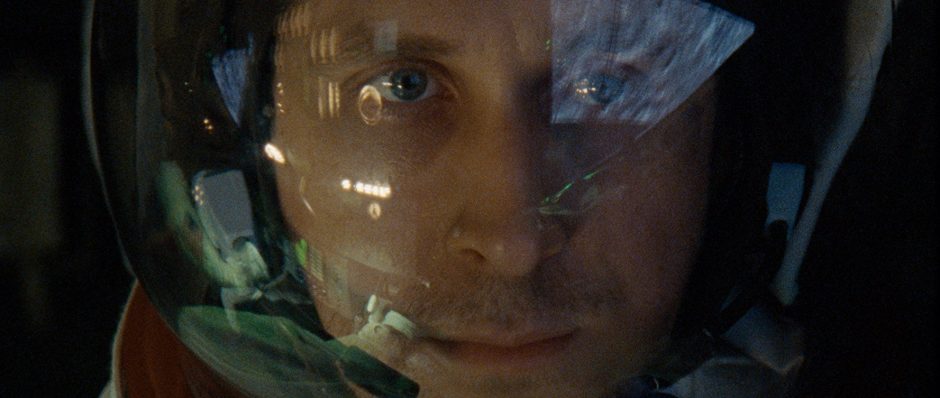
I had the privilege of seeing an exclusive screening of ‘First Man’ on the 9th of October, and after a few days of thinking about it and analysing it… I believe I am finally ready to share my exact thoughts on it.
One thing I cannot deny is that Chazelle has already made it into my list of favourite directors of our generation. His films are always full of tasteful visuals that never leave my eyes dissatisfied. ‘First Man’ does the exact same thing. The moon landing sequences are just breathe-taking and if you didn’t think twice about, you would think they were actually filmed on the moon. Even some of the shots of inside the Armstrongs household are just perfectly alined and symmetrical. This work is purely admirable and I applaud Chazelles directing of this film.
The performances were also just as convincing. Gosling as Armstrong was something that surprised me but nether-less he absolutely nailed the role (as he always does.) Perfectly displaying the disconnect Armstrong felt from his family, and portrays him in such a way that the audience too feels disconnected from him, which some critics believe is a flaw to this film but I think it is a necessary aspect. Armstrong was not a friendly, warm-hearted male. He was quite cold and distant, further displaying that Goslings portrayal of him was accurate and well-thought. Foy also took my breathe away in a particular scene (I won’t spoil) in which she was just phenomenal and I really admired her performance.
Only one or two things bothered me with the film. It was slow at certain points and I found myself wanting a bit more action to happen at times but this is a film about a more personal journey rather than just a mission to the moon, which is also highly admirable. This may just have been a personal preference. The amount of shakey cam made me feel a bit ill at times and sometimes I craved a still shot but I do understand the motifs behind all of it so I guess it is redeemable.
I highly recommend everyone goes and sees this emotional film about a man that no one ever really knew much about it. With it’s perfect visuals, moving score and terrific performances. ‘First Man’ is set to blast off.